Health insights from a single breath.
Apollo is a non-invasive sensing platform that reads biomarkers in exhaled breath, with saliva in development. It starts with metabolic markers and is being developed for hormones and for markers linked to infectious disease and early cancers.
FDA clearance for monitoring use is in progress. Apollo is not yet FDA cleared.
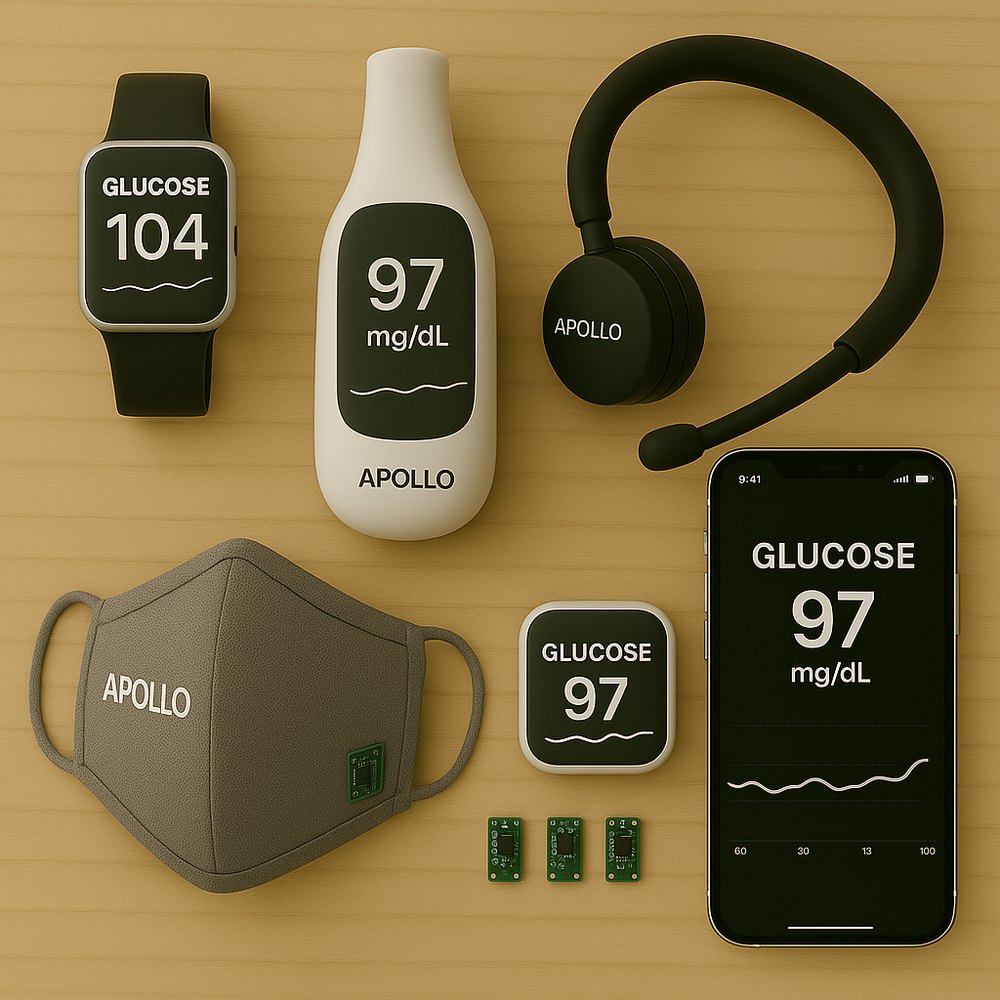
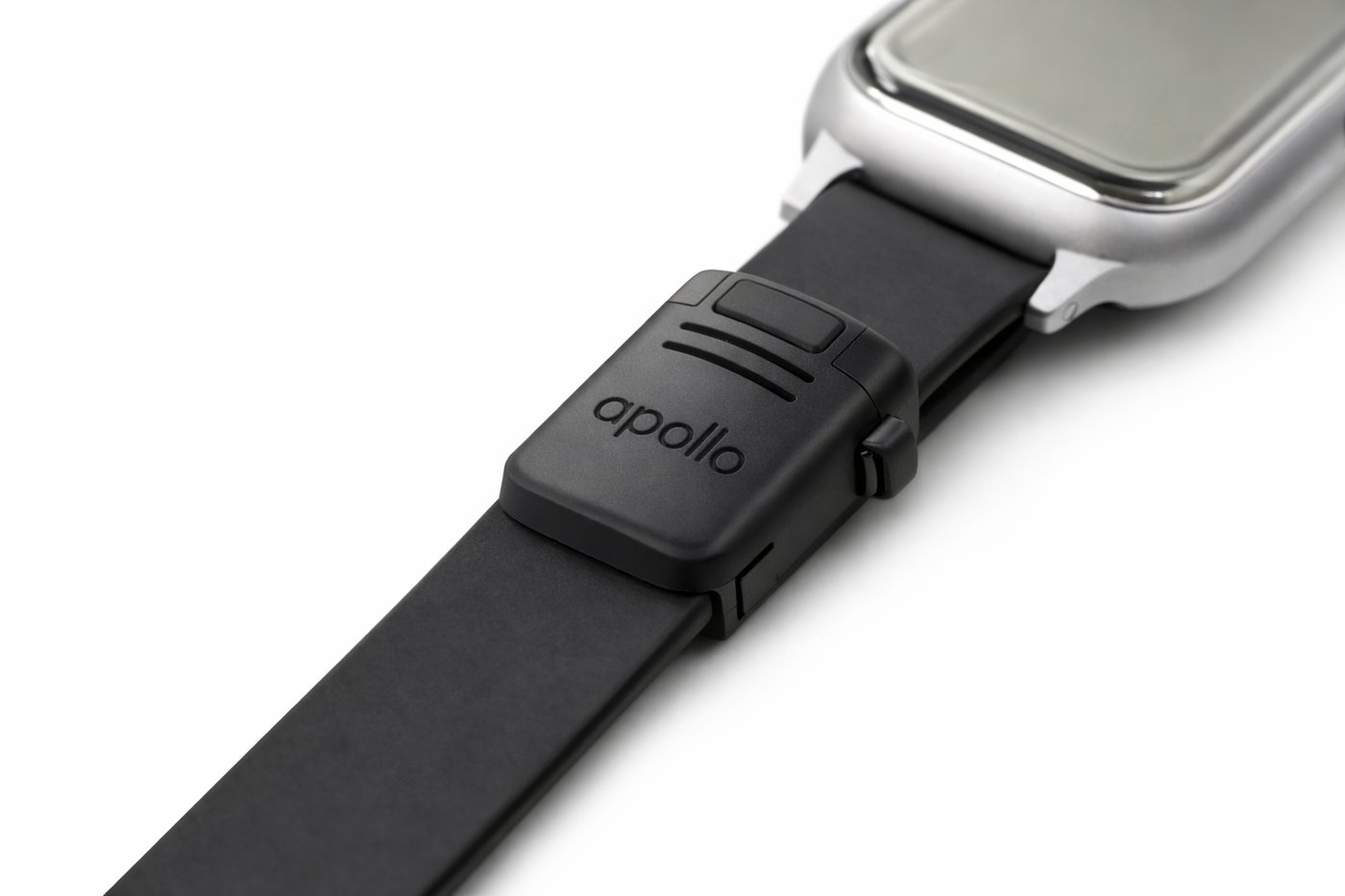 Apollo clip-on · design concept
Most health checks still start with a needle or a lab.
We are surrounded by medical technology, yet everyday health is still hard to check. That keeps most people from looking until something feels wrong.
Invasive
Most tests rely on blood or breaking the skin, which is uncomfortable to repeat every day.
Slow
Labs, equipment and trained staff add days between a question and an answer.
Costly
Price remains a barrier to regular, preventive checking.

Your breath already carries the signal.
Every exhale contains compounds that reflect what is happening in your body. Apollo reads them with a nanoelectronic sensor, so a check takes one breath instead of a blood sample.
Insert a strip
A fresh breath strip, kept at room temperature.
Power on
One button, ready right away.
Exhale
About five seconds of steady breath into the mouthpiece.
Read and sync
Your result appears on screen and syncs to the app.
Concept image with an illustrative reading.
Starting with metabolism. Built for much more.
Breath and saliva carry chemical signals from across the body. Apollo's nanoelectronic biosensor is built to read them in seconds, and the same core extends from one group of markers to the next.
Metabolic
Glucose and ketones from one exhale, with more metabolic markers on the roadmap.
Hormones
Hormone markers from breath and saliva for everyday wellness tracking.
Infectious disease
Markers linked to infection, aimed at fast, non-invasive screening.
Early cancers
Biomarkers associated with early-stage cancers, studied for future screening tools.
Hormone, infectious disease and cancer applications are under research and development. They have not been clinically validated or cleared by any regulator and are not available.
One sensor core. Use it your way.
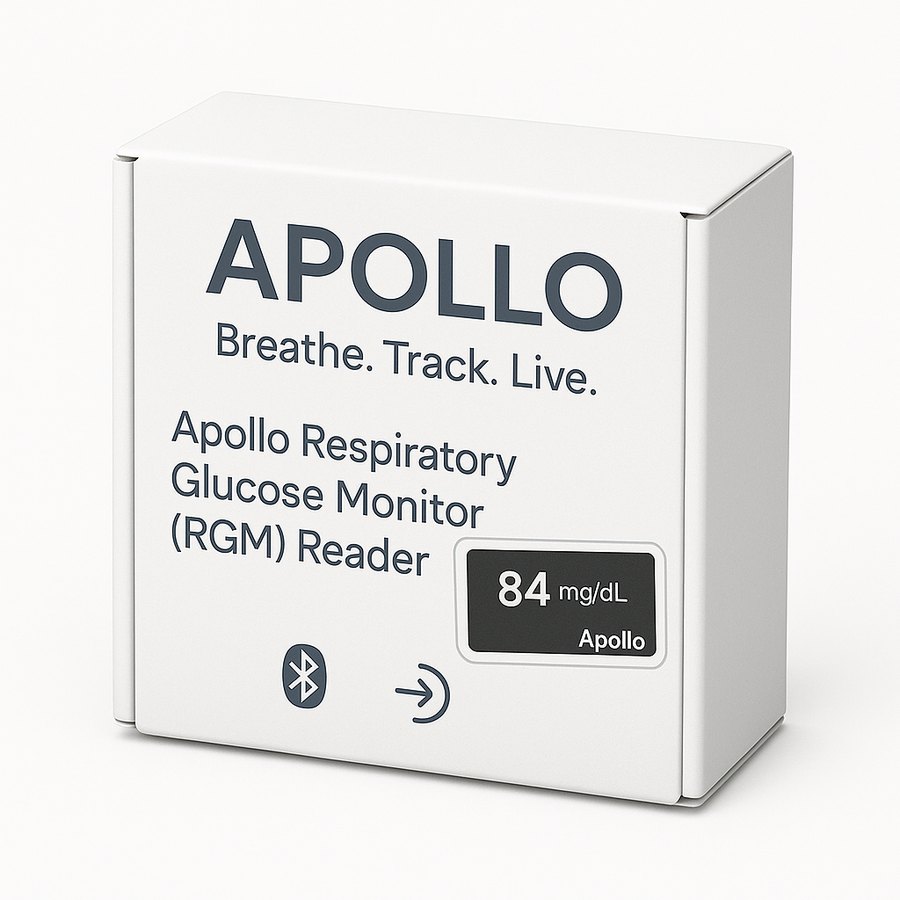
Apollo Reader
A compact reader for a quick check at home or on the go, synced to your phone over Bluetooth.
Apollo Clip-on
Keep the watch you love. A small sensor that rides on your own strap.
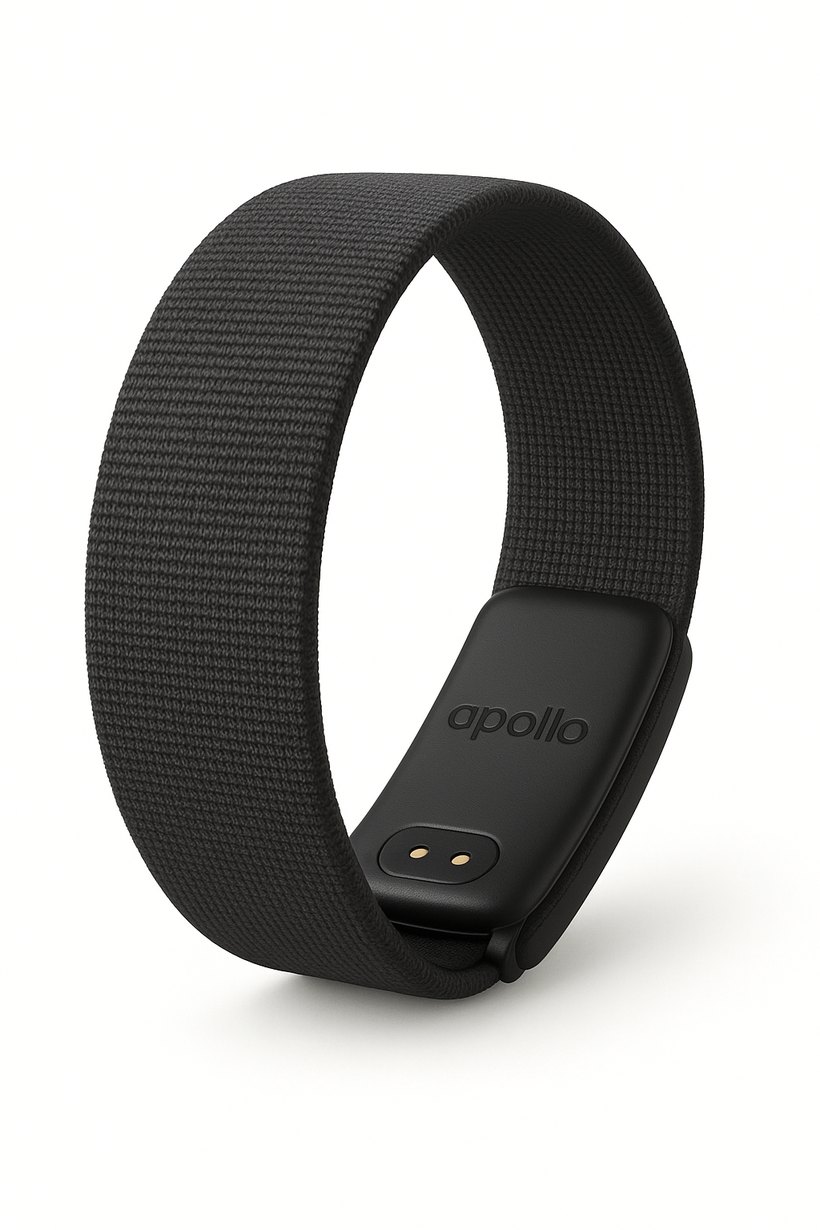
Apollo Band
A soft, screen-free band for quiet all-day wear. Your readings live in the app.
Your daily picture.
See readings on one timeline, log exercise, sleep, mood and meals, and get simple insights about what shapes your numbers.
Readings
Today and yesterday at a glance, with your average.
Lifestyle log
Add the context around each check-in.
Insights
Patterns from your own routine, in plain words.
App demo shown with sample data.

See Apollo in action.
Not renders. Working prototypes.
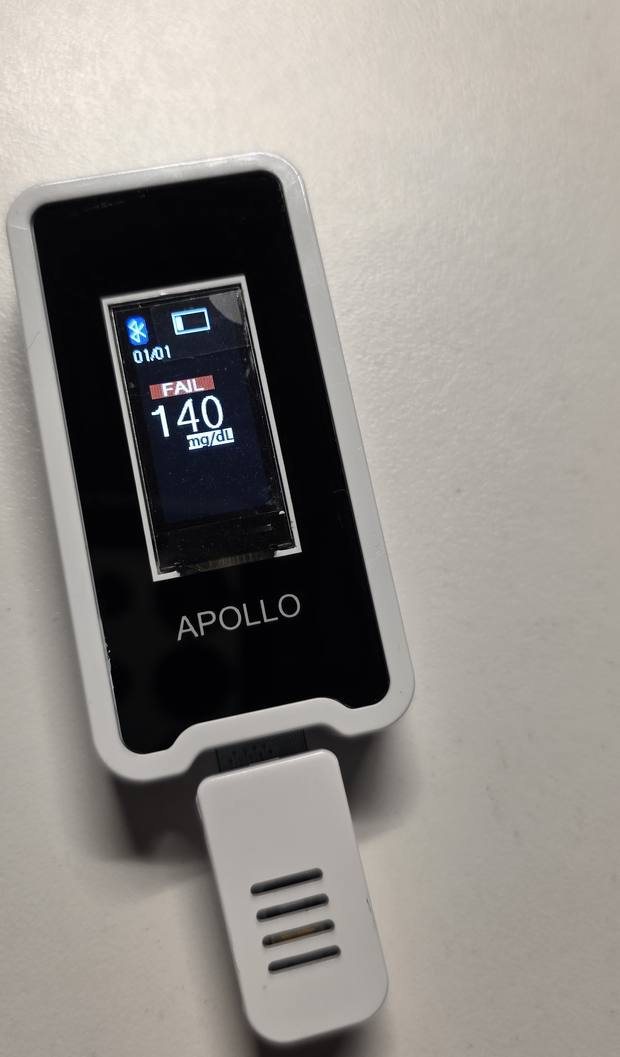
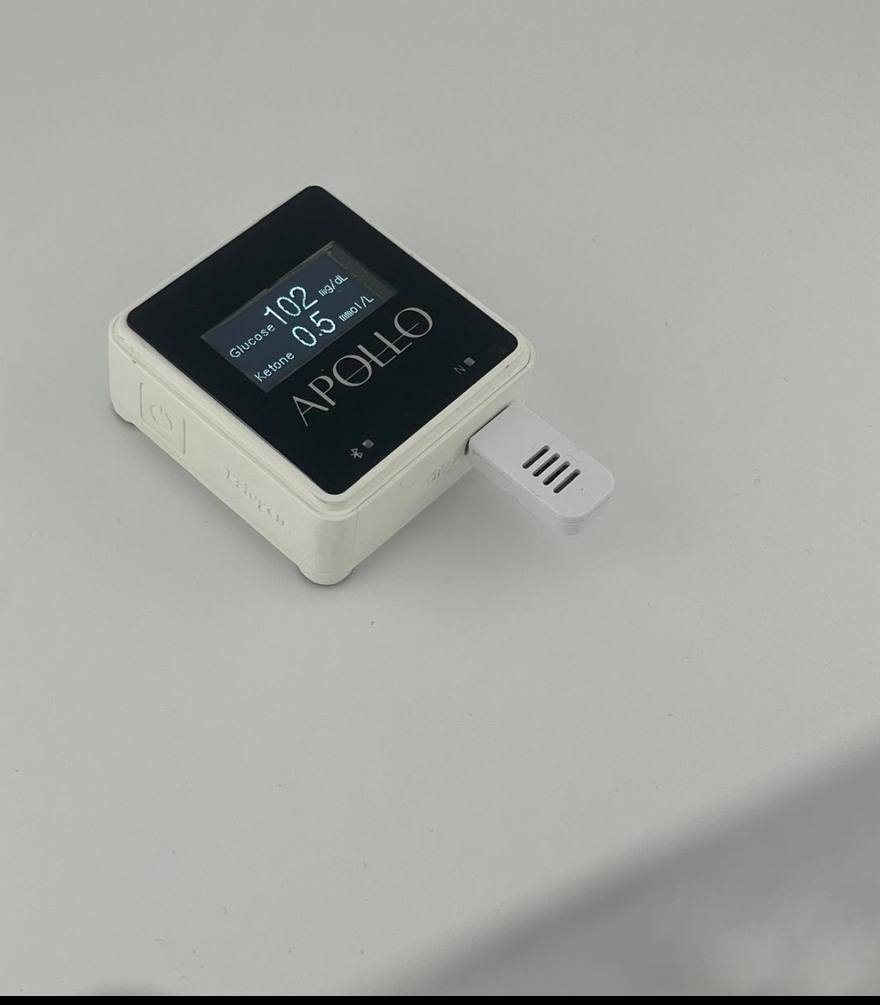
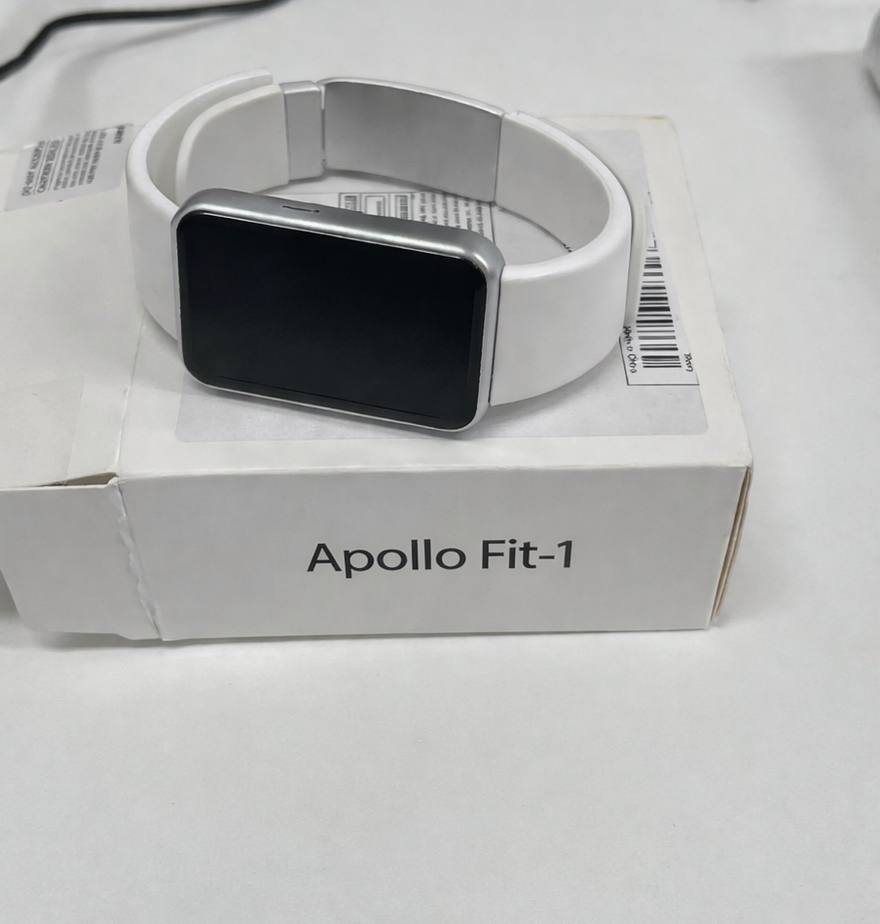
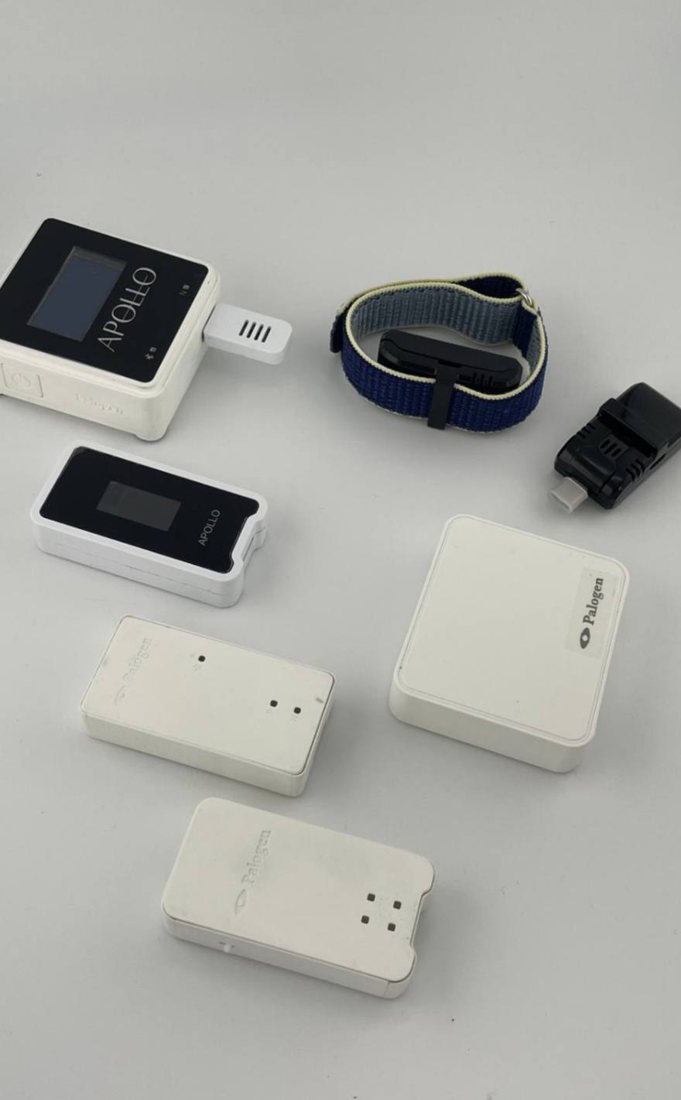
Handheld readers, the Fit-1 wearable and engineering units producing live readings, with Bluetooth sync already running.
Good to know
Is Apollo a medical device?
Not yet. FDA clearance for monitoring use is in progress. Until then, Apollo is marketed as a wellness product: it is not FDA cleared or CE marked and is not intended to diagnose, treat, cure or prevent any disease.
What does Apollo measure?
Current prototypes read glucose and ketones from breath. Hormone markers and markers linked to infectious disease and early cancers are in research and development and are not available yet.
Does Apollo replace medical tests?
No. Keep using any meter, sensor or test your doctor recommends. Apollo adds everyday wellness insights alongside them.
Does it use strips?
The Apollo Reader uses a fresh breath strip for each reading. Nothing breaks the skin and there is no blood.
How long does a reading take?
About five seconds of steady breath, then your result appears on screen and in the app.
When can I get Apollo?
Apollo is planned to launch in early 2027. The clip-on and band are design concepts under development, and the films on this page show illustrative readings.
Talk to us
Fremont, CA, USA
Seongnam, Korea
Dubai, UAE